Microplastics
A new book coming soon

I began to work on microplastics in the south of France. This work has spread throughout A Rocha, the organization I work with, and now we have projects on several continents. It made sense when we first arrived to start with microplastics, as I had a ready-made protocol and experience studying these minute bits of plastic on sandy beaches across the world. Microplastics are pieces of plastic less than 5mm in size and usually classified down to about 1mm, sometimes less. Nano plastics are even smaller and take very specialized equipment, and patience I don’t have, to study. There are two broad categories of microplastics: Primary and Secondary. The latter category is pieces broken down from larger plastic objects. Think of a plastic bucket left on a beach, which is broken down by the sun and waves into small fragments. The Primary category is microplastics that are made at that size. Think of microbeads or plastic pellets. Also known as nurdles, or more prosaically mermaid’s tears, plastic pellets are the building blocks of plastic. They are formed from oil and shipped around the world to be melted down and chemicals added to so that the bucket in question can be formed.
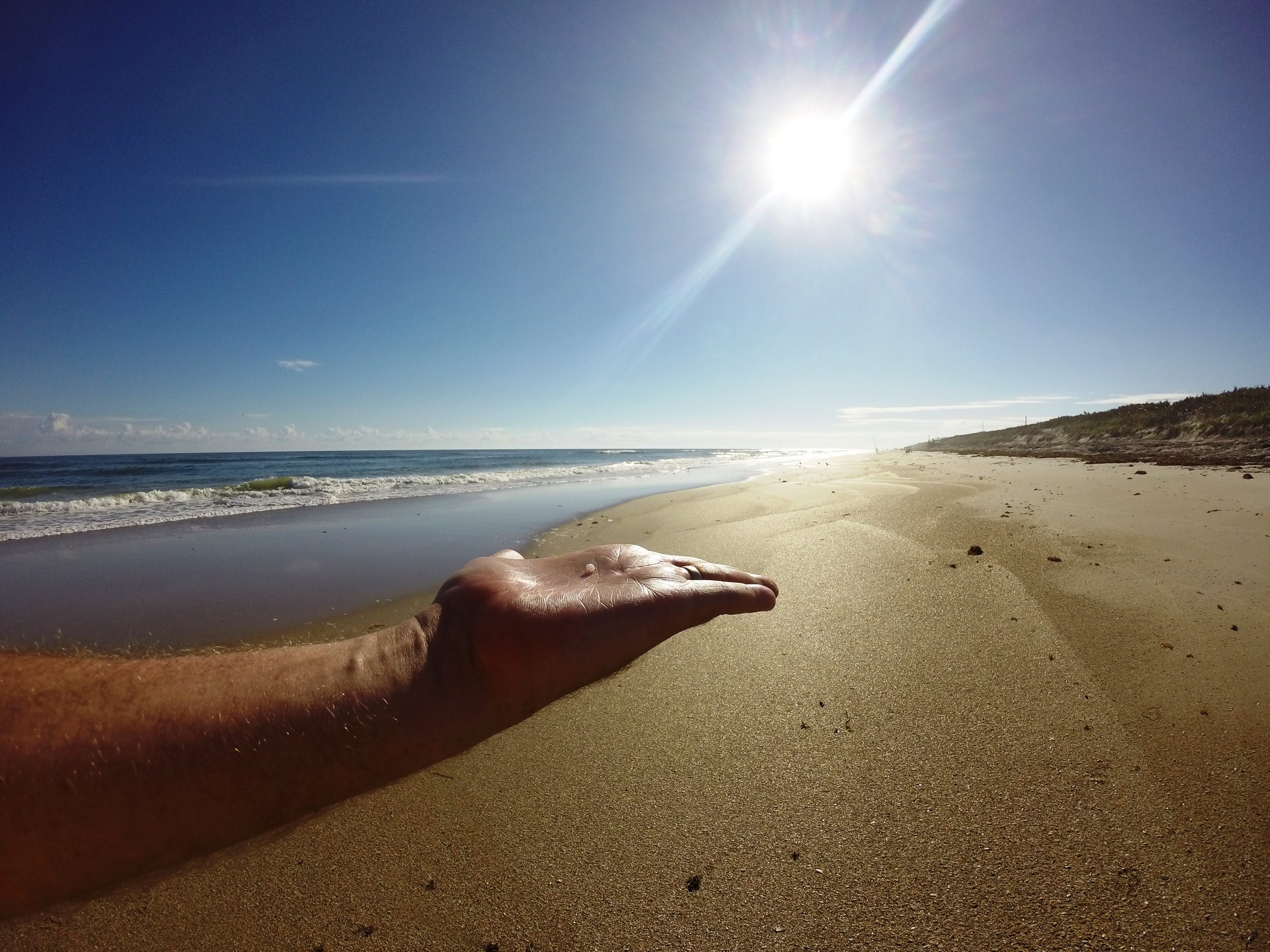
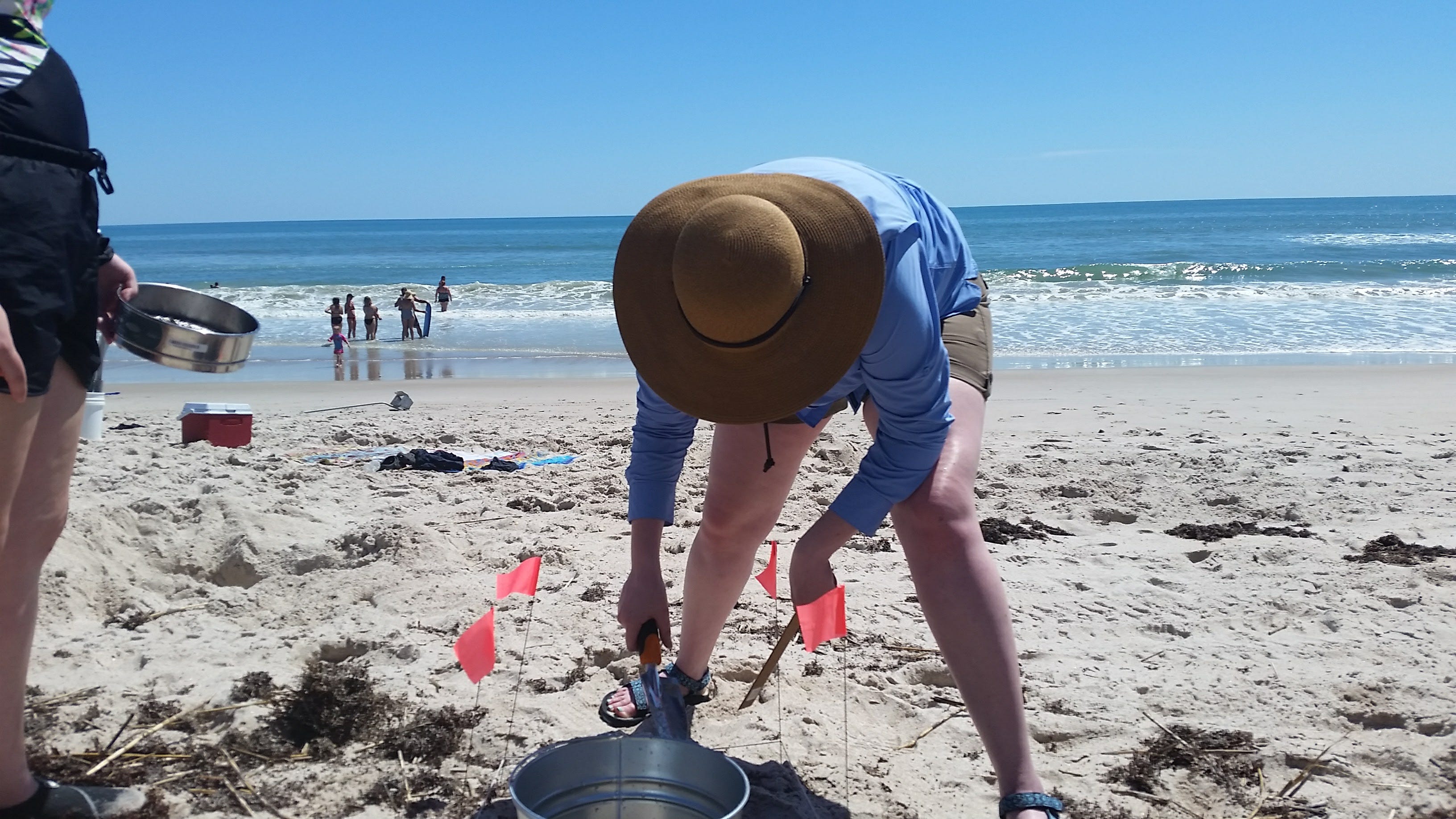
We have studied both Primary and Secondary microplastics at Playalinda. There was one small study as part of a larger study of microplastics in National Parks prior to ours, but it lacked significant details and only sampled a few sites. We first wanted to understand if there were any microplastics and, if so, where and when they might be most abundant. I have written extensively about this work in my book Connected by Water and also examined the theological implications of marine plastic pollution in my Grove Book called Marine Plastics. You can find the details of these studies elsewhere. Here, I will just give a few top-level results.
Not surprisingly, there is an abundance of microplastics at Playalinda Beach. The amounts do not differ much spatially, meaning that if you go and look at the beach near Pier 1 and see a decent amount of microplastics, you will also see a decent amount at Pier 7. If you see very little at Pier 1, you probably won’t see much at Pier 7. This does differ throughout the year, with, unsurprisingly, more microplastics found on the beach during and after hurricane season than in the summer after the calm season. Storms bring in microplastics from the ocean in greater abundance, and so after a large storm, you will see more on the beach. The source is the ocean, and so there appears to be little that can be done to stop the influx of microplastics. Despite the bad littering habits of many beach users, this plastic is probably contributing little to the microplastics at Playalinda. Citizen science nurdle hunts remain an important tool and we continue to monitor the amounts locally. If you go to the websites of The Great Nurdle Hunt or Nurdle Patrol, you will see a plethora of observations recorded for the Space Coast, and these are primarily due to our research and the work of many volunteers over the past seven years.
Playalinda is a special place globally, but particularly locally. It has been the focus of much of my time living in Titusville. I love to sit and just be there. This form of contemplation allows me to rest, and often I find clarity. Where is your Playalinda?