Beach biodiversity
A new book coming soon

Florida’s Atlantic beaches are naturally low in biodiversity. This is due to the physical factors that impact biodiversity on a sandy beach. Three main features of a beach impact its biodiversity: slope, incoming wave direction, and sand grain size. The steeper the slope of a beach, the more the waves will impact the shoreline. It also means that there is a much smaller width of beach, which is naturally inundated with seawater. Playalinda, our main local beach and part of Canaveral National Seashore has a fairly steep slope, with a small area that is exposed at low tide. If you think about some places where the tide goes out hundreds of meters and exposes a huge area to intertidal water features like rock pools, then you will have a contrasting view in your mind. Playalinda and all of Florida’s east coast directly face the oncoming waves of the Atlantic Ocean. This results in rather fierce wave action at times, limiting the number of creatures that can survive in the wave splash zone. Contrast that to a beach that is in a cove protected from direct wave action or faces an opposite direction of the prevailing waves. Lastly, Playalinda has a relatively large sand grain size. This means that water moves through the sand rapidly, and for small creatures, these sand grains do not hold much food. A more muddy, fine-grained sand would contain more organics and thus could support more biodiversity.
So Playalinda then falls on the low biodiversity end of all three of these characteristics. In contrast, imagine a beach that is protected from major wave action, which slopes gently into the ocean such that at low tide hundreds of meters of silty, organic-rich sand are exposed. This beach would have an abundance of biodiversity. Playalinda, on the other hand, has steeply sloping beaches of large sand grain size directly facing major ocean waves. You have to be of stout heart to live in the intertidal zone and on the beaches of Playalinda.
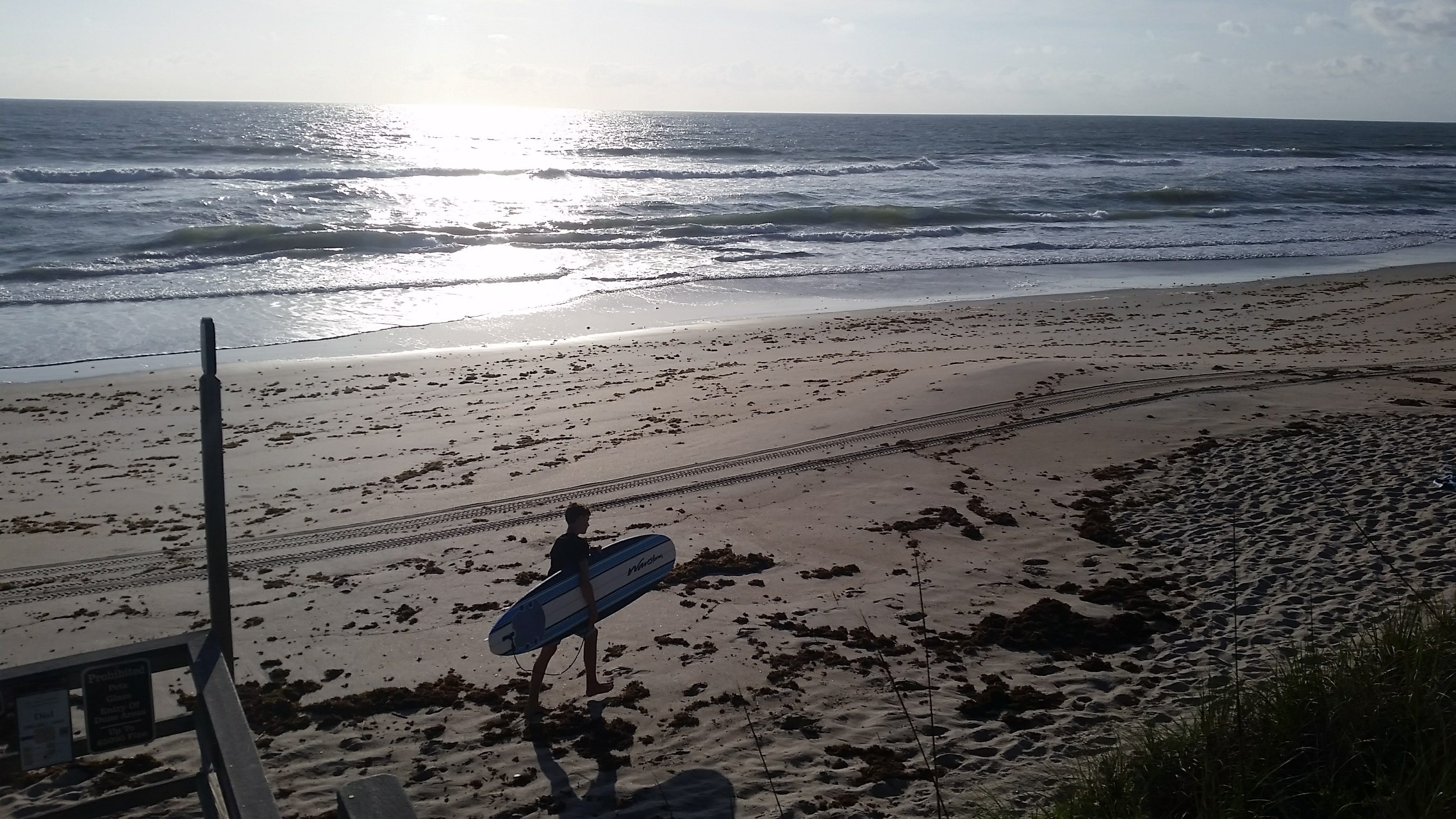
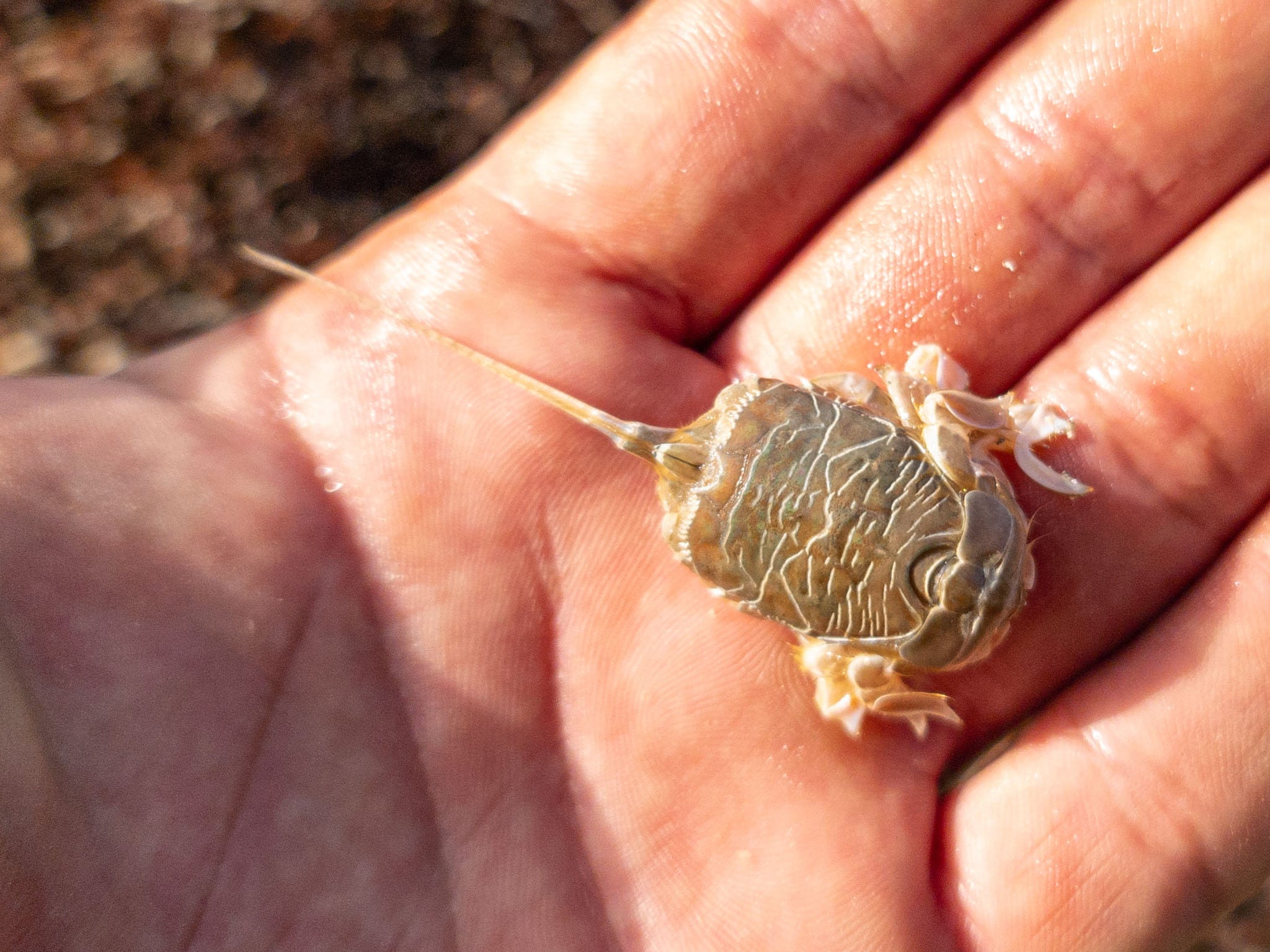
The three major groups of animals that live in the intertidal zone of beaches globally, including Playalinda, are Arthropods, Mollusks, and Polychaetes. Think crabs, clams, and marine worms. On Playalinda’s beaches, this predominantly means mole crabs and, higher on the seashore, ghost crabs, along with coquina shells, a small bivalve mollusk (think clam with two opposing shells). Deeper in the water, particularly at a very low tide, you start to see some worms. On a more diverse beach, you would still have these main groups of creatures, but there would be both an abundance of individuals and more species in each category.
Higher up on the beach, you mostly find sand, well, and a lot of microplastics. The high tide strand line is the farthest reach of water at high tide. This washes up what is floating on the surface of the ocean into a line, usually demarcated by dead seaweed or seagrass. In many cases, this is the ubiquitous Sargassum algae, which floats in the center of the Atlantic until it gets blown out of its circulation, ending up on beaches. You may find jellyfish or Portuguese Man of War washed up in this zone. There is also a community of creatures that live in the decaying vegetation of the high tide strand line, which is terrestrial in origin but unique to this habitat. This includes other types of arthropods such as isopods (think rolly pollies, ie, Wood lice), flies, and beetles – all members of this large Phylum that are defined by, among other things, jointed appendages. Microplastics tend to congregate in this area as they usually float on the surface of the water and can be entangled in all the seaweed and algae.
It is important for developing a sea ethic to know facts about the habitats and creatures of a place. It matters that each species on Playalinda has different life spans, ages of maturity, and growth rates. Thankfully, there are many universities and research NGOs that generate that information. Yet we have to put that information into a framework for use. And the framework matters! Management agencies often use a framework that prioritizes human use – some may label this as stewardship. Looking at habitats and species as “natural resources” objectifies them and separates us from them. A kinship framework focuses on our interrelationships with, to use Jim Morrison’s words, our fair sister.
There is no way here to analyze and elaborate on the world’s wisdom traditions! I reflect on some Christian wisdom traditions in my Grove Booklet on plastic pollution, called uncreatively Marine Plastics. But, as the British publishers stated when they chose it, “it does what it says on the tin.” There are two actions I want to suggest here. The first is to examine and make clear to yourself the wisdom tradition you are drawing upon to make sense of the world, you are whether you realize it or not. Then, with this a little more clearly in mind, intentionally listen to those facts of your place. Walk with intention to make sense of what you are seeing and begin to use your wisdom tradition to interpret it. Examine your assumptions and seek to learn from other traditions. Wisdom may just appear and shine a light ahead in unexpected ways.